Cuba, as a country, is – and for a long time has been – a contested territory, from The Cuban Wars of Independence, fought against the Spanish colonisers, to the crippling blockade imposed by the US since the Revolution. What is not contested though is the sheer quality of Cuban music, which has inspired forms of dance from the salsa to cha cha cha, which have caught on and been practiced worldwide.
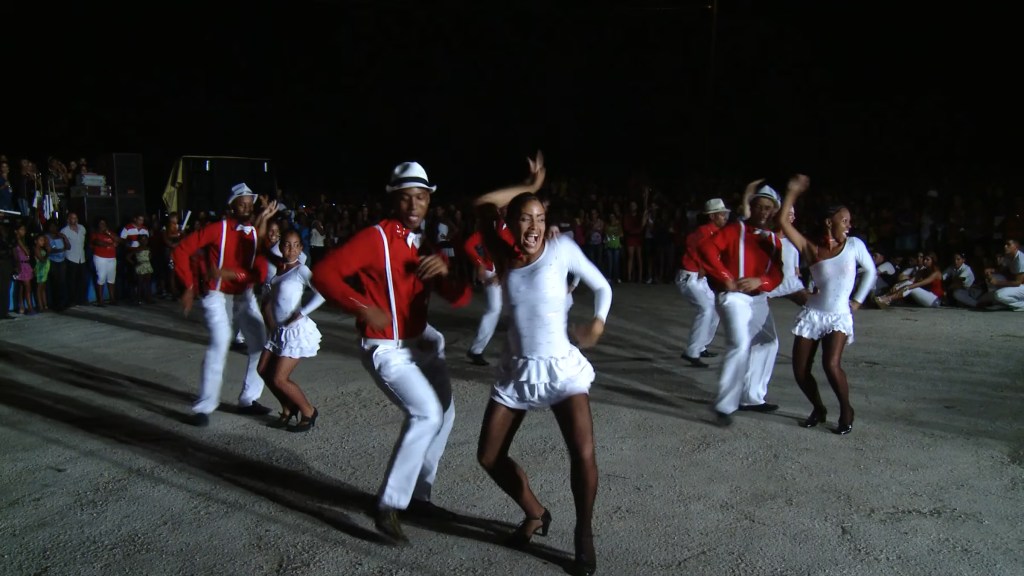
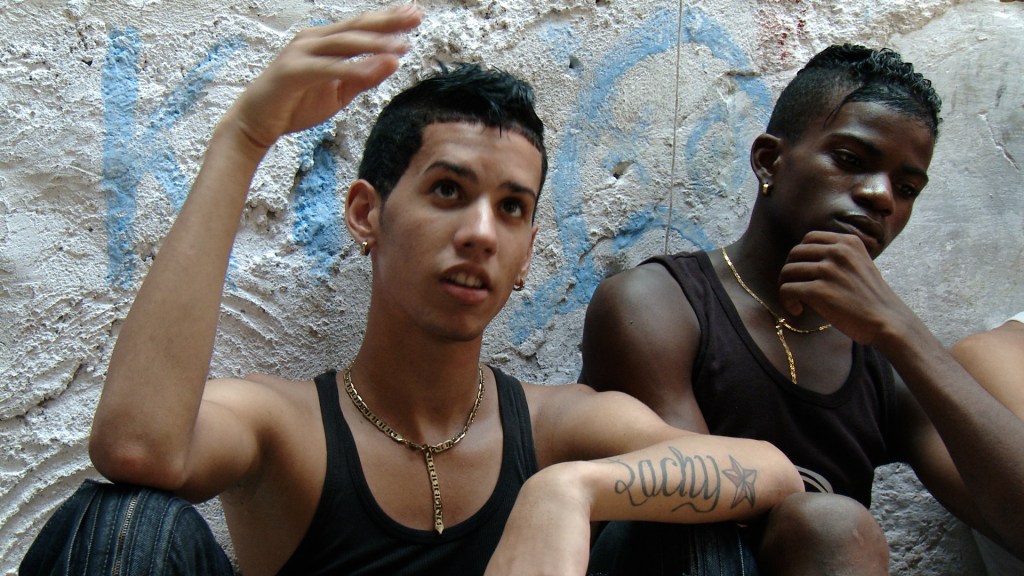
Life is Dance is a remarkable document of Cuban life, and the importance of dance within Cuban culture, which is the fruition of Glaswegian filmmaker Eirene Houston’s longstanding fascination with and love for the island. The film benefits immensely from its intimacy with its protagonists – old timers Marta and Felix, chasing the shades of their youth in the present, Damaris and Gusmel, competitive leaders of small town dance group, and Lachy and Dayan, two brash teenagers who’re heavily into Reggaeton, and think ‘old people’s dances’ are too slow – who between them manifest a fascinating cross section of Cuban society.
This is emphasised by the sensuous, tactile cinematography of Roberto Chile, who was Fidel Castro’s photographer of choice, and by Houston and co-director Hugo Rivalta’s rapport with their subjects.
The film’s been winning plaudits since debuting at Havana Film Festival New York, picking up the audience award at Waco Film Festival, and selling out at Havana Glasgow Film Festival, which Houston runs with Rivalta, and is currently doing the festival circuit.
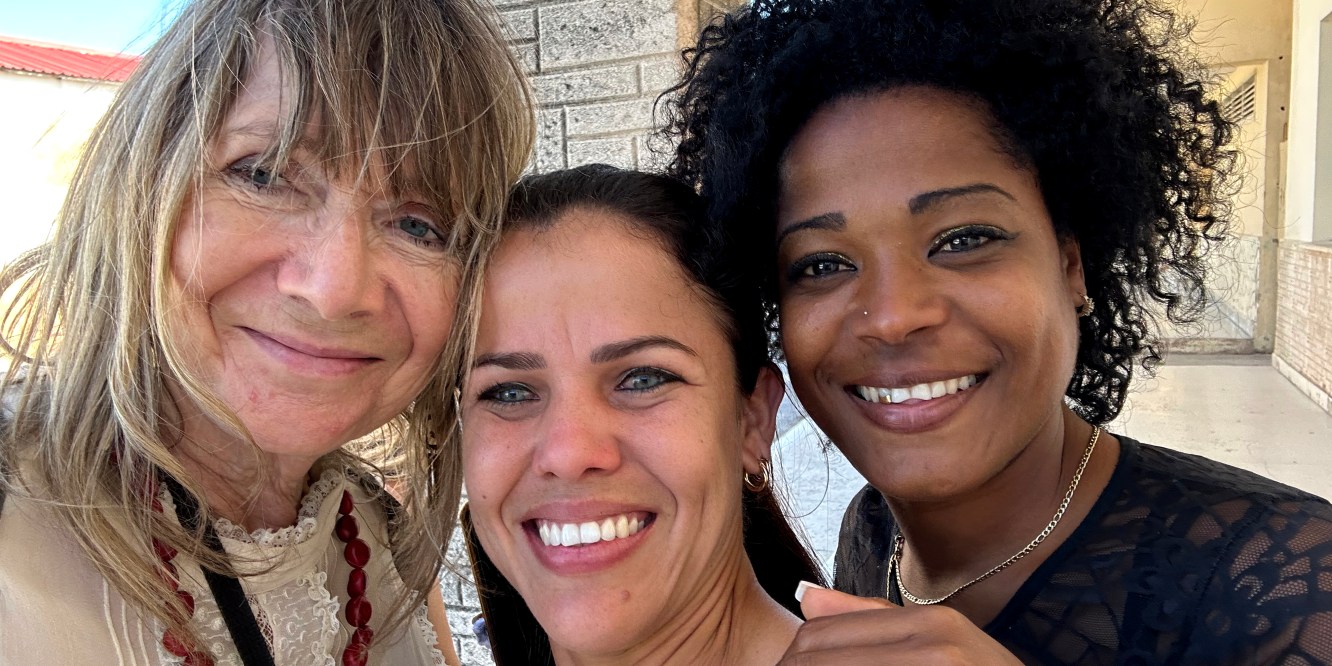
I spoke to Houston about the film just before she went to Cuba on a humanitarian mission.
BB – How did you develop an interest in and love for Cuba?
EH – I’m a child of the 60’s, everything seemed possible. The Revolution had just happened – we really thought we could change the world, and, of course, Che was on the wall in my first flat. I wanted to go to Cuba from the ‘70’s, but it wasn’t something you could easily do with a couple of children. I couldn’t afford it until early ’97, when I got a small grant from British Screen (as it was known at that time) to go and research my first feature film as a writer, which later became Day of the Flowers, released in 2012.
BB – How did Life is Dance come about? I understand that the project took 18 years from conception to completion.
EH -It didn’t quite take 18 years ha ha, we had the idea around 2012 just as Day of the Flowers was coming out. I loved seeing the vibrancy of Cuba in Day of the Flowers. John Roberts (the director) did a wonderful job of capturing special moments in the filming. It made me want to direct something myself with these real moments, but a documentary rather than a fiction. One of the things I loved most about Day of the Flowers was the reception of the Cuban audiences, the laughter and the recognition. There were many layers to the film, many that the public schoolboy male film critics couldn’t see (can I say that, ha ha), and being authentic was so important to me. I didn’t feel I’d earned the right to make a documentary until I’d been going to Cuba for 17 years.
BB – How did you go about collaborating with your co-director Hugo Rivalta?
EH -Hugo and I had by then known each other for 10 years, since I was his screenwriting tutor at the Cuban film School EICTV. Hugo knew how much I love to dance, and we were both curious about the sudden popularity of Reggaeton, especially amongst young people. We talked a lot about what might happen to interest in Cuban salsa and Son, which had been such a huge part of Cuban culture for over 100 years. There really was no question of us not doing Life of Dance together. We threw ideas around until we had our idea and then we set about finding our ‘stars’.
BB – One thing I loved about the film was the intimacy that you achieve with your subjects – how did you achieve that?
EH – Hugo and I are great pals. We have many things in common but also very different personalities. I love talking to and joking with people, I have a ridiculous compunction to make folk smile, often at my own expense and do it all the time, too much sometimes for Hugo’s liking ha ha. Cubans and Glaswegians are very similar in their love of chatting in a queue, in a taxi, anywhere really. It’s obvious that I’ve been in there a lot by my knowledge of what’s going on, my Cuban accent and I can also dance Casino (Cuban Salsa) Hugo also loves to communicate, in a quieter way, but with lots of humour, so the two of us together make people feel at ease very quickly. We like people, and they like us, and we don’t have any airs or graces, we’re in there with them right away. And we were such a small team (4 of us) that made it easier too.
We formed close relationships with all our characters and Marta and I, especially, formed a close relationship. We both love dancing, laughing and drinking beer!
BB – Another striking feature of the film is Roberto Chile’s cinematography – it’s so tactile, so sensuous. Could you speak about his participation in the project?
EH -That was incredibly lucky, I had met writer and filmmaker Eugene Corr in California at Mill Valley Film Festival (fantastic film festival by the way) who coincidentally had just been making a film in Havana. When I wrote to him a few months later about our plan to make a documentary on ordinary Cubans’ passion for dance, and asked if he might know any cinematographers who might be interested in the project, he replied that there was only one man for the job, Roberto Chile. I knew that Chile was a very well known, top Cuban cinematographer, and thought he wouldn’t want to work with a first time director like me, Hugo was like, “we can’t ask him, he’s too famous etc.”, and I said “so, we can still ask him, he’ll love the idea!” Hugo was sceptical, me too but he did love the idea, and was on board straight away! And also trusted me to direct, it was amazing really.
BB – I found it interesting what you were saying in our previous conversation about the decline in partner dancing, both in Cuba and here. Could you speak about its significance?
EH – For hundreds of years there’s been partner and group dancing, we learned traditional Scottish dancing at school. “The dancing” was where everybody went out on a Friday or Saturday night, it was the main social place where men and women met each other. In the ‘40s, ‘50s and early ‘60s young people started dancing, rock and roll, jitterbug etc, but still partner dancing. Partner dancing requires communication, spoken or unspoken, it requires you to learn a skill, it could elevate you, everybody wants to dance with a good dancer. You could become a good dancer no matter what your background.
I grew up in Glasgow at a time when there was a transition from partner dancing to standing in front of a partner but doing your own thing. You were still tapped on the shoulder and asked if you wanted to dance and it was still good to dance with somebody who was a good mover. Northern Soul, for example, was extremely social in many aspects, but it epitomised being skilful at dancing on your own – if you think of hip hop too, all these dances are about the skill of the individual. I can dance
Scottish country, and know them all from school, and I’m grateful for that, but I never learned to Rock and Roll, my first dance was the Twist! I was good at that, ha ha.
This is quite long I know, but dance interests me so much, social dancing I mean.
When I went to Cuba for the first time, everybody was partner dancing, I loved that. It’s not easy to learn, and the first few times I went I wasn’t very good, but I went dancing a lot when I lived a few years in London (at and after film school) and I got better and better, and the better you are the more joyful it is to dance, if you get a good partner. You meet people, you chat, men and women meet in a real and natural way. It made me think of what we lost when we lost partner dancing at home. When you dance with a partner you have to pay attention to them, you have to communicate, and importantly cooperate. It’s much more fun if you both dance well, pay attention and cooperate with each other. It brought men and women together in a way that just doesn’t happen now.
So, I loved that in Cuba, there was still so much partner dancing, you saw people dancing salsa everywhere, then when Reggaeton came along and threatened partner dancing, it reminded me of what we lost at home. This is a big reason why I wanted to make Life is Dance. What will happen if these traditions are lost, can we hold on to them? Sadly, there’s a lot less in Cuba now, but of course that’s not their biggest problem at the moment.
I think the decline of partner dancing is a big part of the reason positive relationships between men and women have declined so much. And if I was going to do a PhD I would do it about that! People still love a ceilidh though. Bring back partner dancing and a sense of community I say.
BB – You have stressed that it’s not a political film – at least not overtly, but subtly, Could you discuss this dimension of the film?
EH – Hugo and I wanted to make a film about ordinary people in Cuba, not about daily hardship, not about the blockade, not about human rights overtly, but about what sustains the Cuban people, and one of these things is dance. Culture is a massive force in Cuba – it’s embedded within the structure of society, and music and dance is a huge part of that. So, it’s not explicitly a film about politics, it is a human rights film, and it is a political film because it’s about people’s right to exist and enjoy the simple pleasures of life. It also shows the strength and heart of the people, it involves the audience and makes them care. It helps them understand Cuba in a way that a more overtly political film wouldn’t. It’s also very accessible. It’s a film for everybody, for people who would never go and see a ‘political film’ and it’s much more likely to make people think about Cuba in a different way than something more direct. It’s a human, humanist story.
We hit a bit of a problem because film festivals don’t see it as a ‘human rights’ film. A sales agent who liked the film told me he only took ‘human rights’ films to submit to festivals, and Life is Dance wasn’t, it was a film for the audience, so we are caught out here. I would like that perception changed – it is a human rights film, only not overly so, why is that not of value? It’s a human rights film which is also for an audience, why should that be mutually exclusive? As a writer and film maker I want to make a film that will reach people, that will connect and touch them in a powerful way. I do that when I’m curating the festival too, films that will entertain, and touch people. I know there’s a place for all types of film, audiences need to be challenged, we need experimental films, people who push boundaries, all that, but I like films about people, about day to day life, about sadness, joy, love and music and a broken record player. There is so much drama and depth to daily life. That’s what I try to show.
BB – We’re both older people who love dancing. This film, which shows the centrality of dance to Cuban life, also highlights the importance of dance at an intergenerational level. Could you talk about that?
EH -I’ve always loved a good wedding, and despite the sadness, a good funeral. The reason for that is, they’re intergenerational. I love being somewhere where all generations come together.
You saw in the film the older and young people sharing their love of dance. There’s a respect that the youngsters have. Dance is a great way to bring old and young together, it’s an equalizer. It’s a bit like what I was saying earlier about how a skill elevates you, it transcends class and age. If you see an older person dancing with lots of energy, young people see you in a different way, again it’s a way to communicate. If you’re a good dancer people will want to dance with you, whatever your age!
BB – Which brings me to Lachy, and the reggaeton kids. How did you find such interesting subjects?
EH – Again, that goes back to what I was saying earlier about getting on with people. Hugo actually found a group of them practicing near the place where Marta and Felix danced. There was a pretty big group of them at first.
When we originally filmed we weren’t sure which of them were the most interesting. They were all pretty good in front of the camera, but when we went back the second time, it became clearer that Lachy had the gift of the gab and was both full of himself, and very self-deprecating. Dayan was way quieter, but what was interesting was their friendship, it was very gentle and I’d almost say, sweet – tender seems a strange word, but it had that quality. And we noticed that each time we went back Dayan was more confident and talking so much more. I do think making the film with them really boosted his confidence. Over a period of 18 months you could really watch them grow. It wasn’t easy all the time though, they’d be late, and wouldn’t turn up, and we’d be waiting, the clock ticking and I’d be cross with them – like a teacher -and they’d take the piss. You asked earlier about the closeness of the relationships we had. I think the fact that they could be cheeky, take the piss and we’d pull them up, but also respect them, gave us a very good relationship. There’s still a lot of love there, and it was great to see Dayan at the screening in Cuba with his daughter and Lachy’s mum.
BB – Reggaeton, and Latino culture in general, are having a moment. How do you think your film fits into this larger framework?
EH – When Hugo and I started making the film we weren’t the biggest fans of Reggaeton, but that being said, there were a few good tunes. Cuban Reggaeton, or Cubaton, I liked much better than the basic Reggaeton, as it merged traditional Cuban rhythms (like salsa and son). Now, years later, there are many more songs which are more complex and have a bit of a tune, a good Reggaeton song comes on and you get up with your pals who’re around you and everybody dances together, apart. It still has that community feel.
And, of course, Bad Bunny has really taken this forward. His super bowl performance starts with salsa, then you can hear a tiny bit of Celia Cruz’s ‘Quimbara’ and as he walks on towards us, he mentions Guaguancó, (Cuban Rumba) a nod to the Cuban roots of Latin music. He respects the past and uses more complex rhythms in his music, something which contributes to his huge success.
It would be great if some of this popularity rubbed off on Life is Dance. I have to admit to being quite a fan of his.
Hugo and I laugh at ourselves, as now we like Reggaeton, only 2 or 3 songs at a time though, not too many. Reggaeton is very much here to stay but salsa and son will never die.
Hopefully, Cuba will never die either, and this film, while not explicitly political – as Houston states above – portrays an unusually vibrant – even unique society at a crucial point in its history, one that’s undergoing impossible, unjustifiable privations, both as I write and as you read this. I trust that Cubans will be dancing to the bittersweet end, as I trust we all will be.