
By Brian Beadie
“Creation must be subversive. We are acrobats in a grand circus, we only want to live on the tightrope, without a wire, and juggle our skins.” – Juliet Berto
Havana Glasgow Film Festival, as the title more than implies, exists to promote Cuban cinema, but -occasionally – widens its focus to look at underappreciated Latin American cinema more generally. This year, the festival is screening Luis Armando Roche’s El cine soy yo (The Moving Picture Man), a film from one of the region’s least cinematically known territories, Venezuela, which may be known – if at all – as an obscure footnote in the career of one of France’s most enigmatic and talented actresses, Juliet Berto. Berto herself is best remembered as the star and co-conspirator of one of the most loved films in cinema history, Celine et Julie vont en bateau (Celine and Julie Go Boating), although she acted in many films and had embarked on an intriguing career as a director, before a tragically early death.
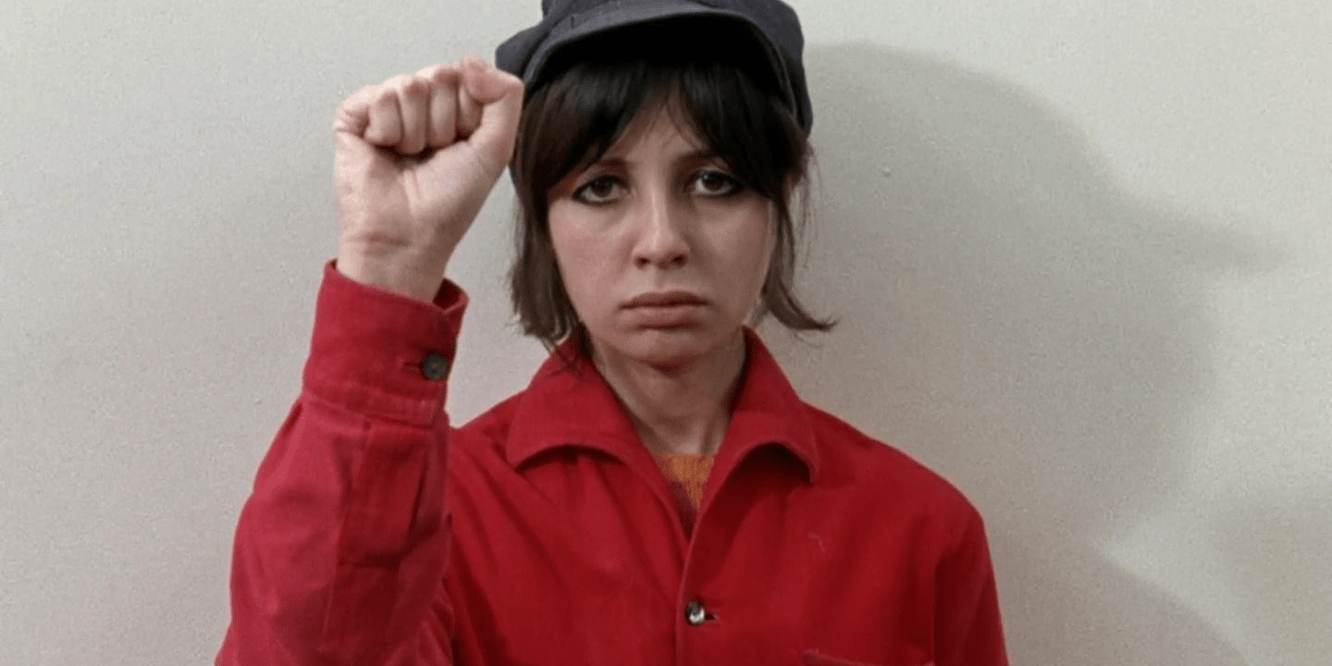
Berto exploded onto French screens in the late 60s as a teenager, a student radical who was able to bypass all the usual ingenue roles to involve herself with politically active cinema – I don’t think she ever made a romcom – after meeting Jean-Luc Godard at a screening of his Les Carabiniers at the university film club she was a member of, when she was still known as Annie Lucienne Jamet. She would soon be playing the small role of ‘Girl Talking to Robert’ – maybe ‘Girl Being Talked at by Robert’ would be a more accurate description – in Godard’s extraordinary equation of capitalism in France with the condition of sex work, 2 ou 3 choses que je sais d’elle (2 or 3 Things That I Know About Her). She would – aged 20 – become a cinematic icon with her next film for Godard, La Chinoise, her beauty offset by the newsboy cap she wore as she barricades herself behind a wall of Little Red Books in a sharp satire about a Maoist groupuscule in Paris with Anne Wiazemsky and Jean-Pierre Leaud. That was 1967 – May ’68 would see France brought to a standstill by student protestors calling for an end to alienated labour and a revolution of everyday life.
Godard had already anticipated – and made dark comedy – out of the situation with Weekend, in which Berto had a small but indelible role on the margins of the chaos. Berto would spend the previous month – April, 1968 – making a film with the deliciously nihilistic title Detruisez-vous (Destroy Yourselves), an anarchic series of non sequiturs shot on Nanterre University campus, where the protests would erupt, with Serge Bard, a dropout from the school. This would be the first film of the Zanzibar Group, named in honour of the island which had declared itself a Maoist state, a collective of underground filmmakers whose work was financed by a wealthy patron in the shape of Sylvie Boissonas, which, while it certainly embodies contradictions, might beat a state funding model and the attendant box ticking. Sadly, they never made it to Zanzibar, as Bard converted to Islam on the way over.
Berto would align herself with the struggle through her work with Godard, who had also embraced Maoism, embarking on his series of radical essay films, inspired more by Situationist filmmaker and writer Guy Debord than by his American auteurist models. Le Gai Savoir (The Joy of Knowledge) is his most aesthetically enjoyable film of this period, as Godard was stronger on visual and aural poetry than Debord, who was undoubtedly stronger on politics, and Berto (as Patricia Lumumba, Daughter of the Third World) and Jean-Pierre Leaud are magnetic as the two young people in a TV studio trying to work out how to remake images in a cinematic year zero. While the film was actually made for French TV, they rejected it out of hand – and cinemas wouldn’t show it either.
Godard would then renounce auteurism altogether, and form The Dziga Vertov Collective with Jean-Pierre Gorin, and of course, Berto was game. She would appear in Vladmir et Rosa, the most (intentionally) funny film they made during that period, and the last. Their aesthetic and political experiment had failed, Brechtianism wasn’t going to bring down capitalism, and it was by now pretty clear that Maoism wasn’t going to spread through France. As incongruous as it may look now, apparently French intellectuals had thought it the most applicable branch of Marxism to apply there, because of the high proportion or people who were still living in rural areas and La France Profonde, the people who now support Le Pen, basically.
There was a distinct sense of anomie running through young French intelligentsia by now, as hope curdled into despair and street fighting was replaced by heroin and opium. I doubt if any film caught the atmosphere of confusion and paranoia better than the film she made with her next (arguably greatest) collaborator, Jacques Rivette – Out 1. A sprawling nearly 13 hour TV series loosely based on Balzac, it relocates the sense of dread to a metaphysical level, with the city of Paris the site of a conspiracy that can only be vaguely intuited by its vast cast of characters, from the two grifters, Colin (Jean-Pierre Leaud), who stumbles upon a series of events he interprets as the History of the 13, and the mercurial Frédérique (Juliet Berto), who’s stealing letters that might be the 13’s secret communications.
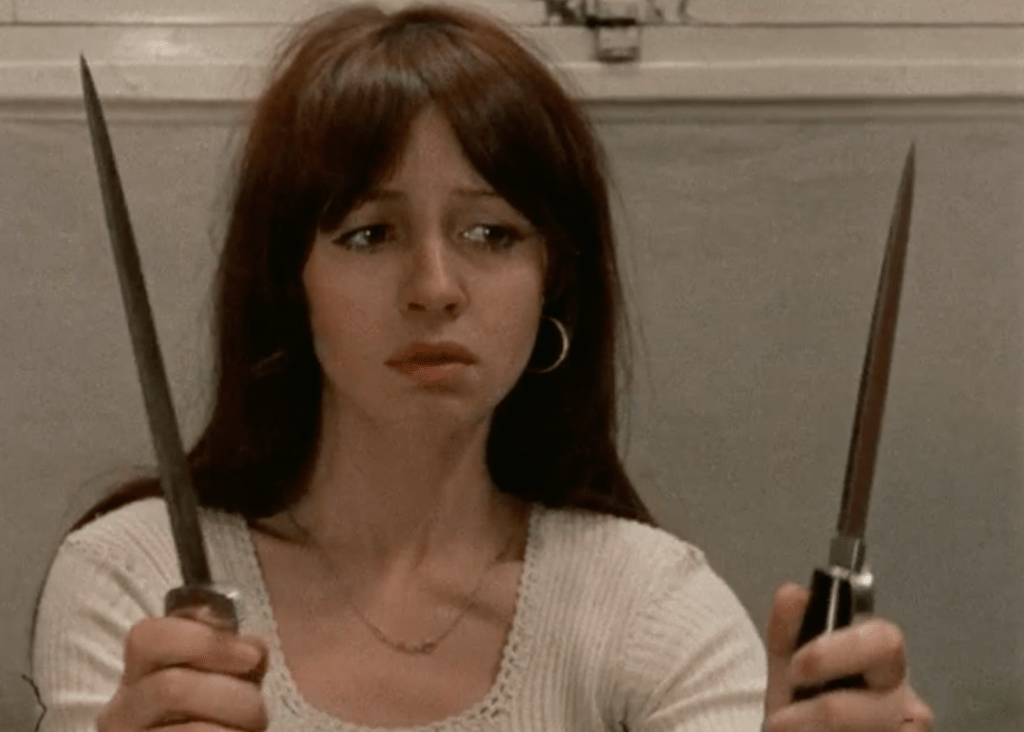
As private as Berto kept her private life, she encouraged her then partner Michel Berto to play the gay barfly Honey Moon, because she told him that he looked like Marlon Brando, and he’s great. This was all too much for French TV, who wouldn’t show it, and, to be honest, the lengthy scenes of French hippies performing improv in rival theatre groups were too much for me, so I must confess I’ve only watched Rivette’s four hour theatrical cut, Out 1: Spectre. However, at the time, virtually no one saw that either, and the original version became a fetish object for cinephiles, until it was eventually restored and released on DVD.
Undeterred, Rivette and Berto would progress to the most celebrated film of both their careers, Celine et Julie vont en bateau (Celine et Julie Go Boating), Berto playing Celine, the magician who, breezing by in her feather boa, leaves a trail for Julie (Dominique Labourier), the librarian with an interest in magic, White Rabbit style. Soon they’ve moved in together and become best of friends, in one of the most sheerly joyous and playful depictions of female friendship in cinema, informed by the actors’ real life affiliation, one that would inspire Susan Seidelman to make Desperately Seeking Susan. Rivette’s film, being a Rivette film, spirals off into other territory though, when the girls discover that they can access a haunted house via magic sweeties, where the same tragic – though the film is more slapstick comedy -event occurs every evening. This was informed by Labourier and Berto, who commented, “We got up early in the morning and told each other our dreams, which the film depended on”.
The film’s very title is a pun, referring to being strung along, and it builds to one of the most audacious twists in cinema history – no mere pulling the rug under the viewer, but the most profound meditation on the very act of storytelling to set alongside Raul Ruiz’s Trois couronnes du matelot (Three Crowns of the Sailor).
The film’s full title is actually Celine et Julie vont en bateau; Phantom Ladies Over Paris, and the latter half of that title could equally apply to Rivette and Berto’s next collaboration, Duelle, a magical, luminous film where Berto’s Queen of the Night battles it out with Bulle Ogier’s Queen of the Sun for the right to remain on the planet Earth – 70s Paris. The very word ‘Duelle’ doesn’t exist, being a feminine neologism for ‘duel’, and I think this film may not actually exist either – it’s the kind of film you feel that you’ve dreamt, rather than actually watched.
However, as gorgeous as Rivette’s Paris looks in these last two films, Berto was setting her sights further afield. Specifically, Latin America. And the fact that she could barely speak Spanish wasn’t going to stop her.
She would work with the radical Brazilian cinema novo director Glauber Rocha in 1976, on Claro, a film which is very much a happening, as well as a working definition of cinema at the end of its tether, as she romps through Rome calling for the end of Western civilisation with flamboyant Italian writer/director Carmelo Bene in tow. While the film gestures towards Brazil, it can’t physically go there, as Rocha had exiled himself for his own safety from the military dictatorship that had taken over in 1971. The next year, she would make it to Venezuela for El cine soy yo (The Moving Picture Man), a much more easy going, picturesque tale, where she’s picked up on the road by an itinerant jack of all trades who’s converted his truck into a whale-shaped travelling cinema. While it might not be one of her greatest films, it feels close to her actual persona, and you can see her pleasure on discovering Latin America for herself.
However, the film world of the 1970s was still a deeply patriarchal environment, one where very few male directors were as open to their actresses’ guidance as Rivette had been. In 1981, she would speak to Delphine Seyrig, formerly one of the top French film actresses, who had turned her back on the industry to only work in radical feminist film, in her scathing documentary on misogyny in the film industry, Sois belle et tais toi (Be Beautiful and Shut Up). Berto would describe her passion for film, and acting – while smoking – as “a reason for living. Something to give me strength, to protect me. I didn’t have that as a girl, because there was so much aggression from boys and all that.”
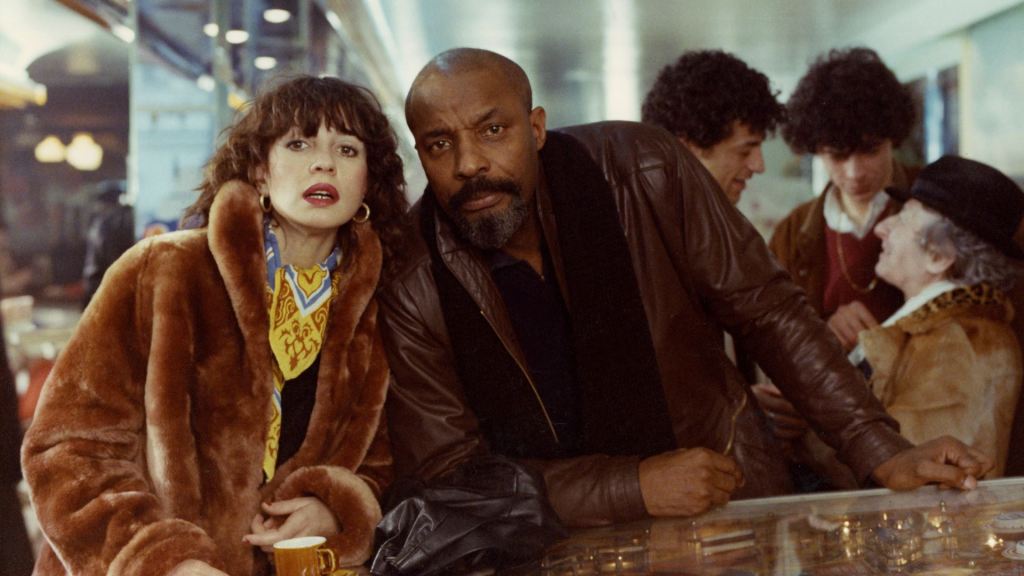
Like Seyrig, she would substantially reduce her acting work, though she did make it to Lebanon, and war-ravaged Beirut, to work with Jocelyne Saab in 1985’s Adolescente, sucre d’amour (A Suspended Life). Berto would now act for herself, taking the lead in her directorial debut with her partner Jean-Henri roger, Neige, a remarkably empathetic and energetic crime drama set in the Pigalle district of Paris, with its roots more in the social dramas of the Popular Front from the ‘30s than the Polar (French thrillers). Fluidly shot by William Lubtchantsky, Rivette’s cinematographer of choice, it could technically be classed as a Christmas movie, since it’s set then, and the ‘snow’ of the title also functions, as in English, as a synonym for a drug, though in this case heroin. The multicultural cast of sex workers, drag artists and marginal characters of this film definitely couldn’t afford the uptown party drug, though. Recognised as an immensely promising debut in France at the time, the film was recently restored, and revealed as a vivid time capsule.
I’m informed that her subsequent film Cap Canaille is in a similar vein, but it’s so rare, I couldn’t locate it. I did source a copy of her final film, Havre, a baroque fantasy once again set in a proletarian setting (the titular port, minus its article), but transfigured à la Rivette via cyberspace, martial arts, a mad (and rather camp) magician and what I think was a sentient computer. But it was hard to tell, as the film is technically lost, or the negative is, with only one beaten print in existence to my knowledge, and I had to watch it on a cruddy VHS rip with no subtitles (my French is getting rusty) which is especially frustrating when the film in question has been shot by the great William Lubtchansky.
It’s tantalising to speculate on how Berto’s career might have turned out, but her death from lung cancer in 1990 would definitively end it. She was only 42.
However, she packed an incredible body of work into her short life, much of it badly in need of restoration and rediscovery, as is so much of cinema history, which is why it is such a pleasure for the festival to present Cinema Rediscovered’s restoration of El cine soy yo, in which she is radiant, and very much alive.
